From surveillance hub to lobby: how a Meiji prison became a luxury hotel
Hoshino Resorts has opened Hoshinoya Nara Prison heritage hotel inside the former Nara Prison in Nara city, transforming Japan’s most intact Meiji era jail into a working luxury hotel that officially began welcoming guests on August 30, 2024. In its 2024 launch materials and press release, the operator describes HOSHINOYA Nara Prison hotel as “a luxury hotel converted from a Meiji-era prison,” emphasizing both the adaptive reuse and the site’s status as a preserved cultural property. The complex sits on the northern edge of Nara, its iconic red brick walls, radial plan and central guardhouse still unmistakably reading as a prison from the street.
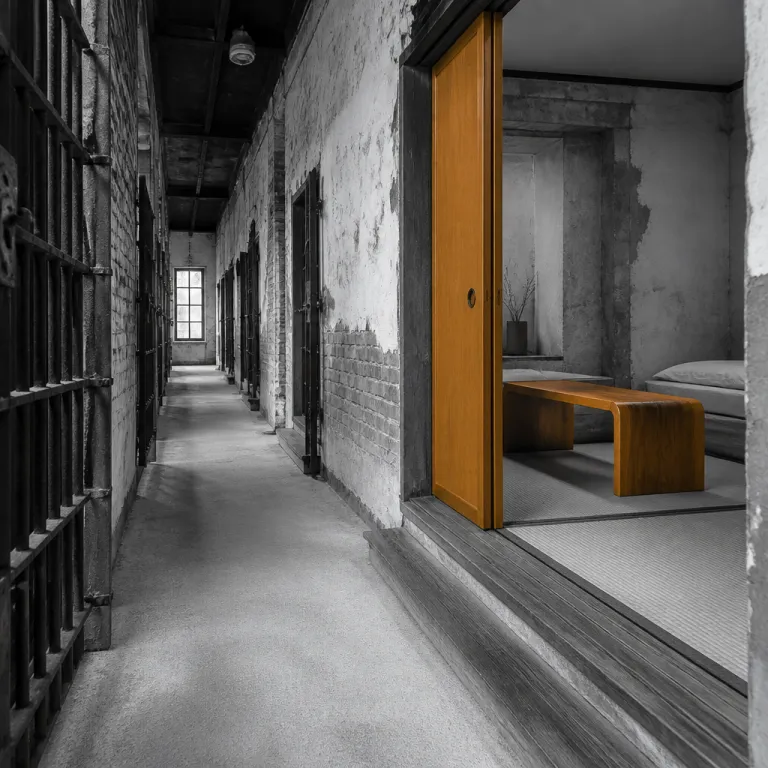
Step through the original gates and the surveillance architecture reveals its new role as hospitality stage, with the guardhouse now a dramatic lobby and the radiating wings framing long views down hand laid corridors. The five spoke plan that once enabled watchful control now guides guests toward 48 suites, each carved from nine to eleven former cells to create generous guest rooms with high ceilings and deep silence. For travelers used to Japan luxury resorts that erase land history, this site insists that history culture and architectural heritage remain visible in every brick and in the way circulation still follows the old guard routes, a point underscored in Hoshino Resorts’ opening statements and design brief.
Azuma Architect & Associates led the design, working with Hoshino Resorts and partners such as Yasui Architects & Engineers and the ICE Urban Environmental Lighting Institute to balance prison preservation with contemporary comfort. In interviews and project notes released around the opening, Azuma’s team emphasized that “the original radial plan and brick envelope were treated as non-negotiable heritage elements,” underscoring the conservation mindset and aligning with the architect firms’ own project pages. The red brick structure, designated an Important Cultural Property by Japan’s Agency for Cultural Affairs in 2017 according to the official listing, retains its laid brick and brick walls, while new interventions in wood, fabric and art soften the once austere interiors. This is not a themed jail attraction; it is a serious adaptive reuse project where the original Nara Prison plan, materials and cultural property status shape every decision, and where key facts can be traced back to government records and the developer’s published materials.
Inside the suites and corridors: an immersive stay in Japan’s only intact Meiji prison
For guests, the most striking aspect of Hoshinoya Nara Prison heritage hotel is how the cellblocks feel from the inside, once the doors close and the corridors empty at night. Long, narrow passageways that once amplified footsteps now hold warm lighting, quiet textiles and subtle art, yet the brick walls and barred windows still signal their prison past. The result is an immersive stay where you sense both the weight of history culture and the precision of contemporary Japan luxury design, with every junction reminding you of the former surveillance hub and the Meiji era penal system it once served.
Each suite merges several original cells into one flowing space, so the proportions feel unlike any other luxury hotel in Nara or elsewhere in Japan. The guest rooms sit behind the iconic red brick envelope, with hand laid details and laid brick arches left exposed as architectural heritage rather than concealed. Hoshino Resorts leans into distinct themes across wings, using different palettes, artworks and lighting concepts to suggest varied narratives without turning the property into a stage set, and staff explain how each wing once housed different categories of inmates, drawing on information also presented in the on site museum and in the company’s background materials.
Solo travelers will notice how the land history shapes movement; you walk the same routes that guards once patrolled, but now toward onsen style baths, tea services and quiet reading corners. The brand’s wider portfolio, from Hoshinoya Kyoto to the kai hot spring resorts and the more urban omo properties, often plays with regional stories, yet here the story is incarceration and reform, framed through Meiji era penal policy and documented in both the museum displays and official cultural property descriptions. If you are planning a heritage focused trip that might also include a ceremony base such as the luxury hotel options near Symmes Chapel described in this guide to using refined hotels as a spiritual retreat base, Hoshinoya Nara offers a sharper, more introspective counterpoint, and practical details such as current room rates, booking conditions and transport access can be confirmed directly through the operator’s reservation channels or major booking platforms.
Museum, ethics and brand narrative: what it means to sleep in Nara Prison
The Hoshinoya Nara Prison heritage hotel does not stand alone; the Former Nara Prison Museum on the same site opened shortly before the hotel and anchors the narrative. As a prison museum, it presents documents, objects and stories that frame the Meiji era penal reforms and explain why this was one of the Five Great Prisons of the period, a status noted in official cultural property listings and in the Agency for Cultural Affairs database. The museum and hotel together turn the complex into a hybrid cultural property, part hospitality, part educational institution, and that dual role matters for anyone uneasy about aestheticised incarceration or about staying in a former place of confinement.
Ethically, the question is whether a luxury hotel can honour prison preservation without smoothing away the harder edges of land history. Here, the presence of the museum, the retention of original walls and the clear explanation of Nara Prison’s role in Japan’s modernization argue that this is more than a backdrop for a brand story. Guests move between the immersive stay of the suites and the explicit context of the exhibitions, which helps keep the architectural heritage legible rather than merely atmospheric, and interpretive materials cite government archives, contemporary accounts and sources also referenced in Hoshino Resorts’ press information.
For Hoshino Resorts, already known for the Hoshinoya flagship properties, the kai hot spring resorts and the more casual omo city hotels, this Nara project pushes the brand further into heritage risk taking. Travelers who have stayed at restored haciendas or monasteries, such as those profiled in this refined heritage stays feature, will recognize the tension between comfort and conservation, but the prison context heightens it and makes the narrative more complex. If you are mapping a wider circuit of historic retreats, you might pair this with a coastal escape like the Aman resort covered in our desert meets sea luxury casitas review, using Nara as the place where Japan’s history culture, architectural heritage and contemporary design collide most starkly, especially once you have walked both the museum galleries and the former exercise yards and then returned to a suite whose dimensions still echo the original cell layout.