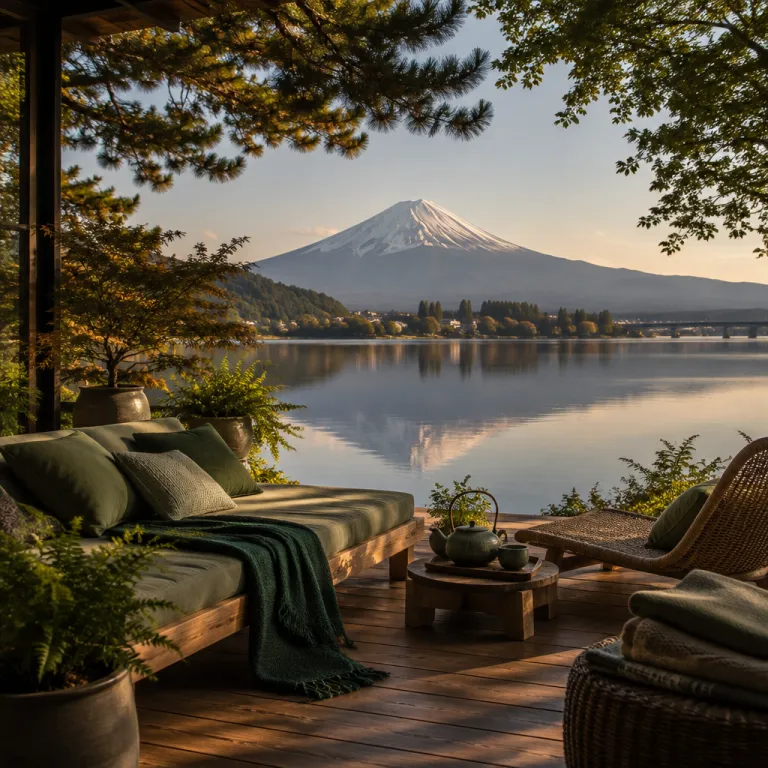
Choosing a kawaguchiko hotel for refined Fuji lakes serenity
A refined stay by Lake Kawaguchi begins with understanding the landscape. The town of Fujikawaguchiko curves gently around the northern shore, framing Mount Fuji with some of Japan’s most cinematic views. From the moment you arrive, the contrast between still water and volcanic peak sets the tone for a calm yet vivid escape.
Luxury travelers usually start by deciding whether they want a Kawaguchiko hotel directly on the lakeshore or slightly elevated on the surrounding hills. Waterfront properties offer uninterrupted Fuji views and the soothing sound of water, while hillside retreats trade immediate access to the lake for a wider, more dramatic perspective of the mountain. Both options can feel intensely private if you choose rooms with a terrace or a private open balcony facing Mount Fuji.
When you check available hotels in Fujikawaguchiko, pay close attention to room orientation. A room facing the mountain can transform a simple stay into a daily ritual, from sunrise colours to the blue hour when the peak softens into shadow. Many Kawaguchiko resorts now specify “Fuji view” or “view of Mount Fuji” categories, so always confirm this detail before finalising your reservation.
For travelers who value quiet, a hotel slightly away from Kawaguchiko Station often feels more serene. Properties close to the station offer the best access for short stays, but accommodations along the quieter stretches of Lake Kawaguchi usually provide more tranquil rooms and softer night soundscapes. Decide whether you prefer effortless transport connections or a more secluded Fujikawaguchiko experience with fewer passing tour buses and day trippers.
Luxury and premium properties in this region often blend Japanese architecture with contemporary comfort. Expect tatami mat flooring in some rooms, shoji screens, and low seating that frames the Fuji views like a living painting. If you prefer Western beds, many hotels offer hybrid rooms that keep the Japanese aesthetic while providing plush mattresses and generous duvets.
For guests comparing destinations, Kawaguchiko competes with other Fuji Five Lakes such as Lake Yamanaka or Lake Saiko. Kawaguchiko usually wins for its balance of refined hotels, easy access, and consistently strong views of Mount Fuji from both rooms and public spaces. Those who want a single base for exploring the wider Fuji lakes region often choose a Kawaguchiko hotel as their primary option, returning each evening to the same familiar silhouette on the horizon.
Hidden gem stays near Lake Kawaguchiko’s quiet shores
The most memorable Kawaguchiko hotel experiences often unfold away from the busiest promenades. On the less trafficked segments of the lakeshore, you find small luxury inns with only a handful of rooms, each one angled carefully toward Mount Fuji. These properties rarely shout for attention, yet they deliver some of the most intimate Fuji-view perspectives in the region.
Look for hotels that position their rooms and private terraces just above the waterline. In these lakeside hideaways, you can slide open wide glass doors and feel the lake breeze drift through your room, carrying the faint scent of cedar and hot springs. On clear days, the combination of Lake Kawaguchiko’s reflections and the snow-capped summit of Mount Fuji feels almost unreal, especially in the quiet just after dawn.
Travelers who appreciate character-rich stays often compare these lakeside retreats with urban creative lodgings such as the Social Goat in Atlanta, which is profiled in an elegant guide to the Social Goat in Atlanta, Georgia. While the settings differ, the emphasis on thoughtful rooms, private corners, and a strong sense of place feels similar. In Kawaguchiko, that sense of place is defined by Fuji views, the rhythm of the lake, and the quiet presence of local life along the shore.
When you check options, pay attention to how many rooms each hotel offers. A Kawaguchiko property with fewer rooms usually means more attentive service and a greater chance of securing a private open-air terrace or balcony. For couples or solo travelers seeking calm, these smaller hotels can be the best option for a restorative Fujikawaguchiko stay.
Some hidden gem hotels sit slightly back from Lake Kawaguchi but compensate with elevated views of Mount Fuji. Here, private verandas often frame both the lake and the peak, creating a layered Fuji vista that changes with the light. If you enjoy photography, this combination of height and distance can be more rewarding than a ground-level lakefront room, especially at sunset when the mountain turns a muted rose.
Guests who value walking access should check how far their chosen Kawaguchiko hotel is from Kawaguchiko Station and the main lakeside paths. A fifteen-minute walk often strikes the right balance between convenience and quiet, especially if you plan to return late from dinner. In this radius, you will find hotels that feel secluded yet still offer easy access to cafés, small galleries, and the occasional hot spring foot bath along the shore.
Japanese style onsen retreats with private open air baths
For many travelers, the defining Kawaguchiko hotel memory is not just the view of Mount Fuji, but the sensation of soaking in hot springs while the mountain hovers in the distance. Traditional ryokan-style hotels in Fujikawaguchiko specialise in onsen culture, offering both communal baths and rooms with private tubs. These hot spring waters are naturally heated and rich in minerals, long valued in Japanese wellness traditions and regulated by local onsen associations.
When choosing among Kawaguchiko onsen hotels, decide whether you prefer a shared bath with expansive Fuji views or a private open-air tub attached to your room. Communal hot springs often provide the most dramatic panoramas, with wide decks and open-air pools facing the lake and Mount Fuji. Private baths, by contrast, offer complete seclusion, ideal for couples or guests who want to linger without any time pressure.
Many luxury properties now offer hybrid options, where you can enjoy both a grand public onsen and a smaller private tub on your balcony. In these hotels, the rooms are designed in a Japanese style that encourages slow bathing rituals, with low stools, wooden buckets, and carefully placed windows framing the Fuji vista. After a long day of exploring, stepping into hot water while the evening light fades over Lake Kawaguchiko feels quietly transformative.
Water temperature matters, especially if you are new to hot springs. Some onsen pools are very hot, while others are moderated for longer soaks, so always check the posted guidance before entering. If you are sensitive to heat, ask the hotel staff to recommend a room with a more temperate private bath or a hot spring pool that suits your comfort level; most front desks are used to these questions.
Travelers who appreciate slow living often compare these onsen retreats with rural sanctuaries such as the intimate property described in this guide to a 16 room retreat built for slow living in rural Portugal. The common thread is a focus on time, ritual, and sensory detail rather than spectacle. In Kawaguchiko, that ritual centers on hot springs, the scent of hinoki wood, and the sight of Mount Fuji rising beyond the steam.
When you check availability, note whether the Kawaguchiko hotel includes onsen access in the room rate or charges a separate fee. Some hotels also offer timed private open-air sessions in larger baths that can be reserved for families or small groups. For a truly indulgent Fujikawaguchiko stay, consider booking a room category that guarantees a Fuji view from your own hot spring tub.
Design forward kawaguchiko hotels with panoramic fuji views
Not every Kawaguchiko hotel leans into tradition; some embrace contemporary design with clean lines and expansive glass. These hotels often occupy prime positions along Lake Kawaguchiko, using floor-to-ceiling windows to capture uninterrupted Fuji views. The result feels more like staying inside a gallery than a conventional hotel, with Mount Fuji as the central artwork.
In these design-driven properties, rooms tend to be larger, with open-plan layouts that blur the boundary between bedroom and lounge. Many feature private terraces or balconies, where a low sofa or daybed invites you to linger over the view of Mount Fuji. Lighting is usually soft and layered, allowing the natural light from the lake and the mountain to dominate during the day.
When you check room descriptions, look for phrases such as “panoramic Fuji view” or “corner room with views of Mount Fuji and Lake Kawaguchiko”. Corner rooms often provide the most dramatic perspectives, capturing both the shoreline and the distant peaks of the Fuji lakes region. If you are traveling as a couple, these corner categories are often the best option for a memorable stay.
Some of the most interesting Kawaguchiko hotels in this category integrate local materials into their design. Expect cedar, stone, and subtle Japanese-style textiles that reference traditional aesthetics without copying them directly. This approach creates a sense of place while still feeling fresh, especially when combined with contemporary art that echoes the shapes of Mount Fuji and the surrounding hills.
Travelers who enjoy curating their journeys across multiple destinations often pair a stay in a design-forward Kawaguchiko hotel with other refined escapes, such as a refined island escape in Maui described in a dedicated guide to where to stay in Maui for a refined island escape. The common thread is a focus on architecture, landscape, and thoughtful service rather than sheer size. In Kawaguchiko, that focus translates into carefully framed Fuji views, quiet lounges, and terraces that invite unhurried contemplation.
When comparing hotels, pay attention to how public spaces are oriented. A lobby lounge with a full Fuji view can be just as valuable as a private balcony, especially if you enjoy working or reading outside your room. For longer stays, these shared spaces help vary your daily rhythm, allowing you to experience Lake Kawaguchiko and Mount Fuji from multiple vantage points.
Practical tips for booking the best kawaguchiko hotel
Securing the best Kawaguchiko hotel for your itinerary requires more than simply choosing a high star rating. Start by deciding the primary focus of your stay: is it onsen relaxation, photography, hiking, or quiet time by Lake Kawaguchiko? Your answer will guide whether you prioritise proximity to Kawaguchiko Station, direct access to the lakeshore, or a hillside location with a wider Fuji panorama.
When you check availability, always confirm which room categories guarantee a Fuji view. Some hotels label rooms as “mountain side” without specifying whether the view of Mount Fuji is fully unobstructed, so reading detailed descriptions matters. If Fuji views are essential to your Fujikawaguchiko stay, email the hotel to request a room on a higher floor or with a specific orientation.
Seasonality plays a major role in both pricing and visibility. Clear views of Mount Fuji are more frequent in colder months, when the air is crisp and humidity lower, while warmer periods can bring haze that softens the outline of the peak. If your schedule is flexible, consider midweek stays, when hotels often have more rooms available and may offer better value for premium categories.
Transport logistics also shape the experience. A Kawaguchiko hotel within walking distance of Kawaguchiko Station simplifies arrival, especially if you are carrying large luggage or arriving after dark. However, hotels slightly removed from the station often provide shuttle services, so always check whether your chosen property offers transfers to and from key points around Lake Kawaguchiko.
For onsen-focused stays, confirm whether tattoos are accepted in the communal hot springs, as policies vary between hotels and are sometimes listed in English on booking pages. If you prefer privacy or have specific cultural considerations, choose a room with a private open-air bath, ensuring you can enjoy hot spring water without restrictions. Families or groups may prefer hotels that offer reservable private hot springs, which can be booked by the hour.
Finally, consider how long you want to stay in Fujikawaguchiko. A single night allows for a brief Fuji impression, but two or three nights give you time to experience different light conditions, from sunrise over Lake Kawaguchi to star-filled skies above Mount Fuji. Longer stays also make it easier to explore other Fuji lakes while returning each evening to the comfort of your chosen Kawaguchiko hotel.
Curated experiences around your kawaguchiko hotel stay
Choosing a Kawaguchiko hotel is only the first step; the surrounding experiences complete the journey. Early risers can walk along the lakeside paths while the air is still cool and the peak of Mount Fuji glows softly. This is often when the water surface is calmest, creating mirror-like Fuji reflections that feel almost surreal.
Many hotels can arrange guided excursions to nearby viewpoints, tea houses, and lesser-known corners of the Fuji lakes region. Ask your hotel concierge to suggest routes that match your pace, whether you prefer gentle lakeside strolls or steeper hikes with a more dramatic view of Mount Fuji. Some properties also offer photography tours timed to capture the best light over Lake Kawaguchiko and the surrounding hills.
Culinary experiences add another layer to your Fujikawaguchiko stay. Several Kawaguchiko hotels serve kaiseki-style dinners that highlight local produce, freshwater fish, and seasonal vegetables, often presented in a refined Japanese style that mirrors the landscape outside. Breakfasts can be equally memorable, with both Japanese and Western options served in private dining corners or in restaurants with wide Fuji views.
On quieter days, consider visiting nearby museums and cultural spaces that explore the relationship between Mount Fuji and Japanese art. Returning to your Kawaguchiko hotel after such excursions, you may see the mountain differently, noticing how light and cloud transform its profile hour by hour. This deepens the sense that your room, your balcony, and even the onsen become private viewing platforms for a living artwork.
Wellness-focused travelers can combine hot springs with gentle movement. Some hotels offer yoga or stretching sessions on terraces with a direct Fuji view, while others provide in-room spa treatments that use local botanicals. After a session, soaking in hot springs or a private open-air tub helps muscles unwind, reinforcing the restorative character of the region.
As you plan, remember that a Kawaguchiko hotel stay is less about ticking off sights and more about settling into a rhythm shaped by water, light, and volcanic stone. The most rewarding hotels and rooms are those that allow you to pause, look up, and feel the quiet presence of Mount Fuji beyond Lake Kawaguchiko. Over a few days, that presence often becomes the quiet anchor of your entire journey.
Key statistics for planning a refined kawaguchiko hotel stay
- Lake Kawaguchiko is one of the Fuji Five Lakes, sitting at an elevation of roughly 830 metres, which contributes to cooler temperatures than central Tokyo and often clearer views of Mount Fuji on crisp mornings (Japan Meteorological Agency data).
- The journey from Tokyo’s Shinjuku Station to Kawaguchiko Station typically takes around two hours by a combination of limited express train and local line, according to East Japan Railway Company timetables, making a Kawaguchiko hotel stay a practical two or three night escape from the capital.
- Clear visibility of Mount Fuji from the Fuji Five Lakes area is significantly higher in colder months, with local tourism boards reporting more than double the number of fully clear days in winter compared with peak summer, which directly affects the reliability of Fuji views from hotels.
- Many premium hotels around Lake Kawaguchiko operate with relatively low room counts, often between 20 and 60 rooms, which allows for more personalised service and a higher proportion of rooms with private terraces or open-air baths compared with large urban properties (regional accommodation surveys).
- Onsen water temperatures in the Kawaguchiko area typically range between 38 and 42 degrees Celsius in guest-facing baths, a range considered comfortable for most visitors while still delivering the therapeutic warmth associated with Japanese hot springs (local onsen association guidelines).
FAQ about staying in a kawaguchiko hotel
Is a lakefront kawaguchiko hotel better than a hillside hotel for views ?
Lakefront hotels place you directly on the shore of Lake Kawaguchi, giving you intimate water-level Fuji views and easy access to lakeside walks. Hillside hotels, by contrast, offer a wider panorama that often includes both Lake Kawaguchiko and Mount Fuji in a single frame. If photography and sweeping vistas matter most, a hillside Kawaguchiko hotel is usually the better option.
How many nights should I stay in fujikawaguchiko to enjoy the area fully ?
A single night in a Kawaguchiko hotel allows you to see Mount Fuji and experience one onsen session, but it can feel rushed. Two nights give you time to enjoy different light conditions, explore parts of the Fuji lakes region, and relax properly in hot springs. For travelers who value slow travel and Japanese-style hospitality, three nights often feels ideal.
Do all kawaguchiko hotels have a direct view of mount Fuji ?
Not every Kawaguchiko hotel offers a guaranteed Fuji view, as orientation and surrounding buildings can limit sightlines. Many hotels have a mix of lake-view, mountain-view, and standard rooms, so you must check room descriptions carefully. If a clear view of Mount Fuji is essential, choose a category explicitly labelled “Fuji view” and request a higher floor when booking.
What is the difference between a public onsen and a private open air bath ?
A public onsen is a shared hot spring bath, usually separated by gender, where guests follow Japanese bathing etiquette and enjoy larger pools with expansive Fuji views. A private open-air bath is reserved for a single room or for timed private use, allowing couples or families to bathe together in seclusion. Travelers who prefer privacy or have tattoos often choose rooms with private open-air baths to enjoy hot springs comfortably.
Is it necessary to stay near kawaguchiko station for convenience ?
Staying near Kawaguchiko Station simplifies arrival and departure, especially if you are using public transport and carrying luggage. However, many lakeside and hillside hotels offer shuttle services, so you can enjoy a quieter location along Lake Kawaguchiko without sacrificing convenience. If you plan to explore widely around the Fuji lakes, a hotel with shuttle access and clear transport information is usually the best compromise.