From ambient luxury to intentional days: how rituals reshape the bohemian stay
Luxury bohemian hotels are no longer defined only by layered textiles and artful design. The most interesting properties now compete on how they structure a guest’s day through intentional rituals that turn a simple stay into a sequence of meaningful experiences. This shift toward a distinctive bohemian hotel rhythm means many guests feel that time itself has been quietly curated around them.
Across these properties, hospitality teams treat the twenty-four-hour cycle as their primary design canvas, not just the rooms or public spaces. Morning breathwork on the terrace, a slow coffee ceremony in the courtyard, and an unhurried reading hour at dusk form a gentle set of anchors that help guests create their own narrative of the day. For solo travellers, this choreography of moments in a bohemian hotel offers options for connection without pressure, and privacy without isolation.
Data from the Global Wellness Institute helps explain why this approach is gaining ground. Its Global Wellness Economy Monitor 2023 report estimates that wellness tourism reached $651 billion in 2022 and projects it will almost double to $1.4 trillion by 2027, encouraging hotels to integrate well-being into core hospitality strategy rather than treat it as an add-on. Within this context, questions such as “What are morning rituals in hotels?” and “Why do hotels offer morning rituals?” become practical for any guest planning a stay. In industry terms, morning rituals usually mean structured activities like yoga, meditation, or guided breathwork offered to guests to enhance well-being and provide memorable experiences. Whether these sessions are included in the stay or charged as extras varies by hotel, so it is worth checking the daily schedule and rate inclusions before you book.
Morning rituals as invisible architecture: breathwork, sound and the slow breakfast table
Before breakfast, breathe: that is the quiet instruction shaping many bohemian hotel experiences today. In practice, this might mean a pre-sunrise yoga class on a rooftop in Lisbon, a sound bath in a candlelit room in Mexico City, or a guided meditation in a Marrakech riad, all offered as part of the stay rather than as bolt-on wellness options. At Casa No Tempo in rural Portugal, for instance, the hotel team hosts complimentary dawn yoga by the lake, followed by a communal farm breakfast, turning the first hours of the day into a shared ritual rather than a rushed buffet.
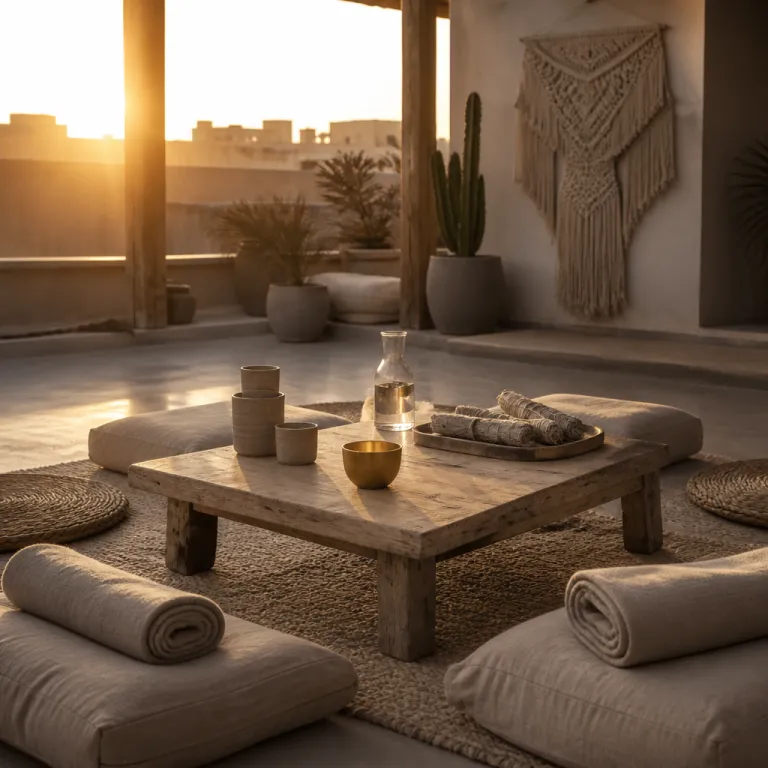
Design plays a decisive role in how these rituals feel, because the same yoga sequence in two different spaces can produce radically different emotional responses. A thoughtful bohemian hotel will use natural materials, low seating, and tactile textiles to form a room that invites bare feet and slower breathing, while the team keeps lighting low and soundscapes warm. At Hotel San Cristóbal in Baja California Sur, the long outdoor breakfast table, woven chairs and terracotta surfaces create a relaxed bohemian setting where guests linger over coffee and local fruit. For readers interested in how objects support these experiences, our feature on vintage furniture that anchors bohemian hotel interiors shows how a single long farmhouse table can turn breakfast into a daily ritual.
From a neuroscience perspective, these hospitality rituals work because memory formation strengthens when multiple senses are activated at once. Research published in Neuron (for example, Shams & Seitz, 2008, on multisensory learning) and related journals has shown that multi-sensory experiences are more likely to be encoded deeply in the hippocampus, which helps explain why guests recall certain mornings long after check-out. The aroma of local coffee, the feel of linen against skin, the sound of a handpan or vinyl record, and the first light on a courtyard wall all combine to create experiences that stand out. When a hotel team designs mornings this way, they are not simply adding amenities; they are designing time, and that is what sets the most ambitious bohemian hotels apart.
Afternoons for the solo explorer: workshops, siestas and the art of unstructured structure
By midday, the best bohemian hotels shift from inward-focused rituals to outward-looking experiences that honour both curiosity and rest. For solo travellers, this is where thoughtful hospitality matters most, because afternoons can otherwise become the loneliest part of a stay. A well-considered bohemian hotel framework will offer a light set of options that guide the day without dictating it.
Some properties host small-scale workshops with local artisans, where a guest can learn natural dye techniques or hand-build ceramics in intimate spaces that feel more like studios than hotel facilities. At La Valise Tulum, for example, guests can join complimentary cacao ceremonies and small craft sessions, while paid one-to-one sound-healing appointments are available for those who want deeper work. Other hotels lean into siesta culture, dimming corridors, softening music and encouraging guests to retreat to shaded courtyards or garden hammocks, turning rest into a respected form of activity rather than a gap between scheduled events. Our guide to bohemian hotels where the garden matters more than the lobby highlights properties that set their entire afternoon rhythm around outdoor life.
These afternoon patterns work differently for solo guests because they create natural touchpoints for conversation without forced socialising. A reading hour in the library, a natural wine tasting at a communal table, or a sketching session in the garden all allow guests to choose their own level of engagement. Over time, such rituals create a subtle social architecture that makes the hotel feel like a lived-in bohemian home rather than a transient set of rooms.
Evening communion: from natural wine hours to circadian design
As daylight fades, bohemian hotels often lean into rituals that blend sensory pleasure with gentle community building. A natural wine hour in the courtyard, a chef-led supper at a long table, or live acoustic sets in the lounge can all form the emotional high point of the day. For many guests, these evening experiences are where a stay shifts from pleasant to unforgettable.
The line between ritual and programming is delicate, and the most thoughtful hotel team understands that not every guest will want a full social calendar. Instead of stacking events, they create a loose set of recurring moments: perhaps a nightly candle lighting in the lobby, or a vinyl record chosen by a different guest each evening. Circadian design supports this by using lighting systems that warm in colour temperature through the day, and curated soundscapes that move from bright morning energy to low evening hum, as explored in our piece on the invisible architecture of lighting, scent and acoustics.
For solo travellers, these evening rituals offer a sense of belonging without obligation, because you can sit at the edge of the action with a book or step into conversation when it feels right. The hotel team’s role is to read the room, adjusting music levels, seating arrangements and pacing so that guests can choose intimacy or anonymity. When done well, this form of hospitality turns the hotel into a temporary village where life unfolds at a human scale.
Booking with intention: how to read a bohemian hotel’s rituals before you arrive
On a luxury and premium booking website, the language around bohemian hotel rituals and guest experience can be as revealing as the photos. Look for how a hotel describes its day: do they mention specific morning practices, afternoon workshops, or evening gatherings, or do they rely only on generic wellness claims? A property that treats rituals as part of its core design will usually outline them clearly, with timings, spaces and the role of local partners.
When comparing hotels, pay attention to whether rituals are complimentary or paid, and whether they are capped in size to preserve intimacy for each guest. Many properties now offer pre-arrival questionnaires where you can choose preferred activities, from yoga classes and sound healing to organic breakfasts with local produce, allowing the team to set a loose framework for your stay. If you value flexibility, prioritise hotels that frame rituals as invitations rather than obligations, with language that emphasises choice and personal rhythm.
Finally, consider how these rituals align with your own life and travel style, especially if you are a solo explorer. If you crave quiet mornings, a hotel that centres its day around sunrise gatherings may not suit you, no matter how beautiful the spaces. The most rewarding experiences come when you book a bohemian hotel whose approach to hospitality mirrors the way you want to feel from first breath before breakfast to the last candlelit hour at night.
FAQ
What are morning rituals in bohemian hotels?
Morning rituals in bohemian hotels are structured yet gentle activities such as yoga, meditation, sound healing or slow communal breakfasts designed to ease guests into the day. They often integrate local traditions, from regional pastries to indigenous wellness practices, and are usually offered in thoughtfully designed spaces like rooftops or courtyards. These rituals aim to improve mental clarity, provide cultural immersion and set a calm tone for the rest of the stay.
Are morning rituals usually included in the room rate?
Many bohemian hotels include core morning rituals like group yoga or guided meditation in the room rate, especially when these practices are central to their hospitality philosophy. More specialised sessions, such as one-to-one sound healing or private breathwork, may carry an additional fee that is clearly indicated at booking. It is wise to check the hotel schedule and confirm inclusions before you choose your dates.
Why do bohemian hotels focus so much on ritual rather than amenities?
Bohemian hotels prioritise ritual because structured, sensory-rich moments create stronger memories than static amenities. Neuroscience research shows that when multiple senses are engaged simultaneously, experiences are more likely to be encoded deeply, which is exactly what these properties aim to achieve. By designing the guest’s day around intentional touchpoints, they transform a standard hotel stay into a coherent narrative of experiences.
How do rituals support solo travellers staying in bohemian properties?
For solo guests, rituals provide natural connection points that feel organic rather than forced, such as a shared breakfast table or an evening wine hour. These recurring moments allow travellers to meet others in low-pressure settings while still retaining full control over how much they engage. The result is a stay that feels both independent and quietly supported by the hotel team.
How can I tell if a hotel’s rituals will suit my travel style?
The clearest indicators are the daily schedule, the tone of the descriptions and the flexibility offered around participation. If a hotel outlines a rigid timetable with little room for personal pacing, it may not suit travellers who prefer spontaneity or long, unstructured days. Look for properties that present rituals as invitations, with varied options across morning, afternoon and evening so you can align the stay with your own rhythm.